
Zooming Out: A Landscape Paper on IIIF and Wikimedia
Jake Orlowitz, June 10, 2026
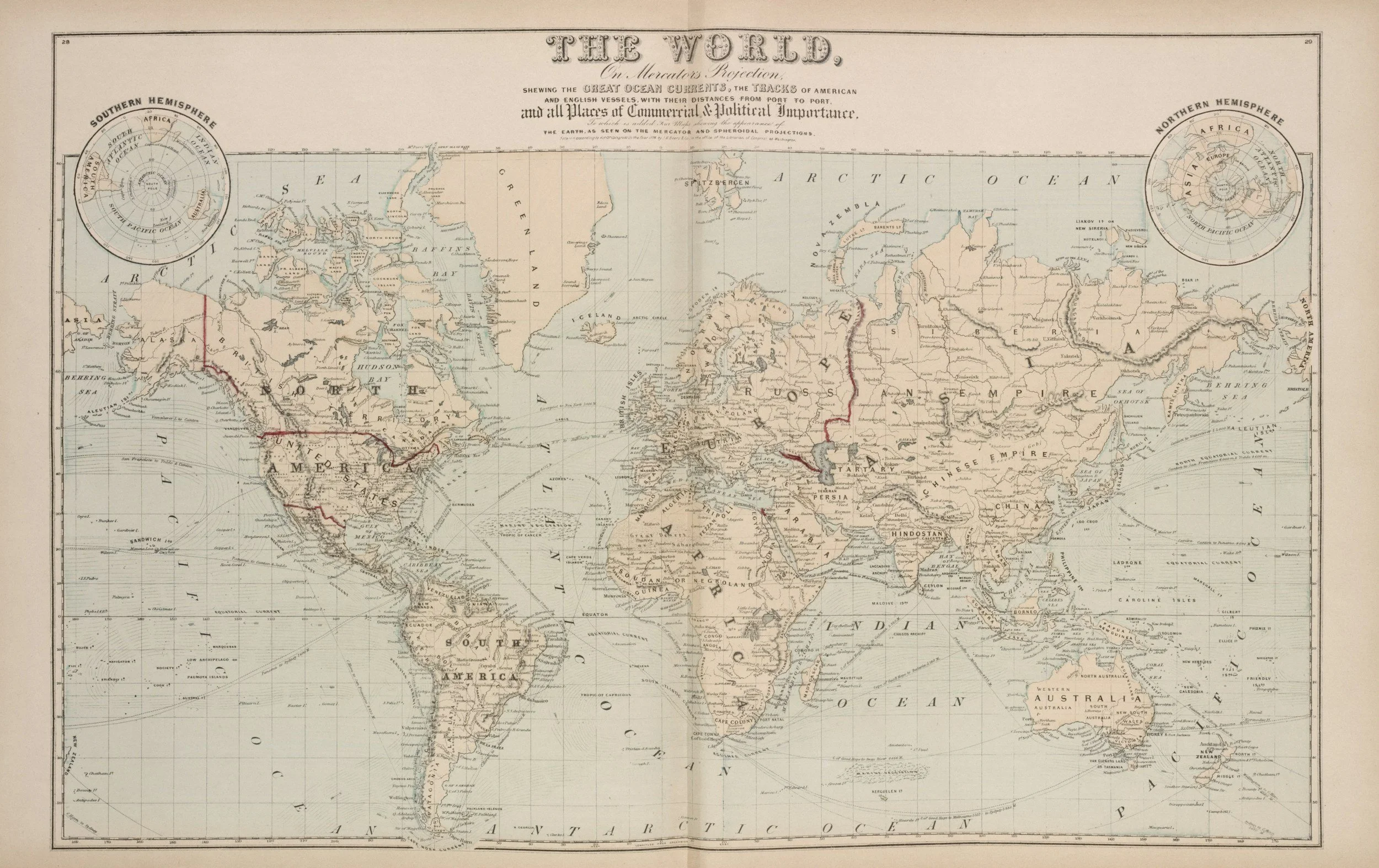
This week, IIIF released Zooming Out: Can We Integrate IIIF and Wikimedia?, a landscape paper commissioned by the International Image Interoperability Framework Consortium and written by WikiBlueprint. We hope you'll read it with a curious and critical eye.
The question at its center sounds simple. IIIF is the open standard thousands of galleries, libraries, archives, and museums use to serve high-resolution media online. Wikimedia Commons and Wikipedia are where the public actually encounters much of the world's cultural heritage. Should these two ecosystems be connected more deeply?
What we tried to do
Zooming Out is a landscape document. It proposes no deployment, no architectural change, no policy shift. It tries instead to make a complicated set of decisions legible, so that the people who would actually live with the consequences can weigh them for themselves.
The possibilities are complex yet hopeful. Zoomable manuscripts and maps inside articles. Manifest-driven pathways that could let institutions share collections at scale without overwhelming volunteers. Region-level annotation that aligns with how Wikisource already works. Cultural objects connected to Wikidata as part of a shared knowledge graph.
But every one of those possibilities comes wrapped in a hard question, and the paper spends most of its pages on hard questions. Wikimedia cannot depend on external endpoints, so content would need to be imported, stored, and served directly. Commons licensing requirements are non-negotiable, and a great deal of IIIF content would simply never qualify. JavaScript-heavy viewers raise real performance and security concerns, especially for readers on slow connections, and performance is itself a form of accessibility. Extensions need maintainers for years, and Wikimedia has watched too many tools arrive with enthusiasm and decay in silence.
We tried to write those challenges with the same care as the opportunities, because the people most skeptical of integration tend to have the best reasons. Commons volunteers, GLAM professionals, and WMF engineers each bring legitimate priorities, and some of those priorities are in tension. The paper's aim was to surface those conflicts plainly enough that stakeholders can engage robustly and disagree productively.
The paper closes with two proposals: a dedicated Wikibase instance serving as a registry for IIIF manifests, and a Wikipedian in Residence focused on Commons–IIIF coordination. We offer them as experiments rather than plans. Both are designed to be opt-in, measurable, and reversible. The burden of proof sits with the proposers, and the community's answer may well be "not like this" or simply "not yet."
An open invitation
We're grateful to the IIIF Consortium for how they commissioned this work. They asked for an honest assessment, knowing it might complicate their own case. When a funded paper opens with its challenges section, that reflects well on the client's integrity. IIIF wanted a real answer about whether their standard could fit within Wikimedia's constraints, and they were willing to publish a document that says "maybe, under conditions, and only with consent."
Thanks also to the IIIF community members who read early drafts, and to the Wikimedia staff and volunteers whose questions and pushback shaped the thinking throughout. The most critical feedback was consistently the most useful. Several sections exist because someone disagreed firmly enough that we had to go back and think again. The paper owes its clarity to them.
If you are a Commons administrator, a template or gadget maintainer, a GLAM digitization lead, a MediaWiki engineer, or an IIIF implementer, this conversation belongs to you. We'd ask you to read the paper, argue with it, and tell us where it's wrong. The recommendations move forward only if communities decide they should, at a pace they choose, with the right to change the plans.
The closing line of the executive summary says it best: if you're reading this, you're part of the conversation.
— — —
Zooming Out: Can We Integrate IIIF and Wikimedia?is freely available.
WikiBlueprint provides ethical Wikipedia consulting for cultural institutions, organizations, and mission-driven nonprofits. Learn more at wikiblueprint.com.