
For companies and people
The Wikipedia article about your company, or about you, outranks your website in search and trains the AI assistants your customers ask first. It carries a credibility your own channels cannot match, because you do not control it. We help you earn a presence there that editors will accept and defend. Most people who write to us are not sure Wikipedia will let them in at all, and that is a fine place to start.
Where things stand, first
Wikipedia decides whether a company or a person gets an article by asking one question: have journalists with no connection to the subject written about it, at length, in publications that check their facts? Size, revenue, and reputation do not settle it on their own. What counts is who has independently chosen to write about you, and how seriously.
So every engagement opens with a written analysis, notability for a new article or improvement for an existing one, and we run it free, before any fee is discussed. We read everything that has been written about you, weigh it the way Wikipedia's editors will, and send you a short document with the answer on the first page. It tells you which coverage counts, which does not, and what would change the verdict.
When the honest answer is not yet, we say so in writing, and the conversation ends with a plan and no invoice. Clients tell us the verdict alone was worth asking for, whichever way it came out, because it replaces guesswork with a written answer.
What you get back
- A plain answer to whether Wikipedia will accept an article about you
- The coverage that carries the case, and the coverage that does not
- If the answer is not yet, what would change it
- What happens next, in one paragraph
Not yet
The coverage is not there yet, and we name what would change that.
Maybe, with a path to yes
The case can be built, and we explain why it is hard.
Likely, by a narrow margin
Enough to proceed, with the risks named.
Notable, comfortably
A short verdict that moves straight to scope.
What we take on
A first article
Your company or career has grown into serious press coverage and there is no article yet. We build the case from independent reporting, draft in Wikipedia's own voice, and guide the submission through the community's review queue. If reviewers turn the draft away, the fallback is named in advance: an expanded passage in a parent article, at no additional fee.
Improving an existing article
The article is stale, thin, lopsided, or built on press releases and company bios. We verify every existing citation against its original, build the independent source set, and produce either a complete replacement or a sequence of edit requests with a line-by-line change log. Well-sourced criticism stays in; content leaves only when its citation fails.
Warning banners and deletion
A banner at the top of the article, or a nomination for deletion, is a sourcing problem with a deadline. We diagnose what the banner is asking for, fix the sourcing, and only then ask for it to come down. In a deletion discussion we work out the case with you before you post it, and we tell you when the better move is to let a section go.
Monitoring and retainers
For a company whose article draws steady attention, we watch every edit and notify you of reverts, warning tags, deletion nominations, and significant unsourced additions, and we work out the response with you before you post it. A retainer can cover a whole portfolio of brands, subsidiaries, and executives, with one report each month.
How an engagement runs
-
Research
We find everything independent that has been written about you, including the coverage behind paywalls, with access to roughly 100,000 journals and newspapers. Your own materials point us in the right direction; the article stands on what others have written.
-
Drafting
We draft the article or the edit requests with you in Wikipedia's factual style, each statement tied to a source that editors will accept. You bring the facts and the corrections; we bring the voice, the framing, and the sourcing judgment that lets an article survive scrutiny. We revise together until you are comfortable with every line.
-
Submission
You submit the draft for review, or post the suggested changes on the article's Talk page, under your own disclosed account, with us on a live video call as you do it. Volunteer editors decide what goes in. Through review we read every question with you and work out the reply together within one business day. Up to two resubmissions carry no additional fee, and twelve months of monitoring follow publication.
Fees are fixed and paid in three equal parts as the work progresses. Our part takes a few weeks; the community's review runs on its own clock, which is why we stay with you through it.
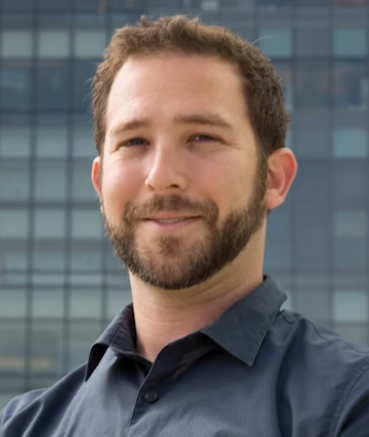
Jake was able to teach me about editor norms and culture, as well as how to successfully engage with them. This resulted in my research institute's page being successfully updated with news and sources. Jake's strong ethical standards and deep understanding of Wikipedia processes has proven invaluable to me and my organization.
Seth Kroll, Harvard
What we control, and what we do not
- We control the quality of the draft, the strength of the sourcing, the completeness of the disclosure, and the way we conduct ourselves under community scrutiny. Those are the things that decide whether a proposal is accepted, and they are ours to get right.
- What we do not control is when the review happens or how it comes out. Wikipedia is reviewed by volunteers who weigh coverage differently from one another, and pressing them to hurry works against you. So the fee pays for the work and the process, and we say that plainly because it is the reason the work holds up.
How we treat you
We answer within a business day, explain every term in plain language, tell you the truth about your chances before you spend anything, and stay beside you through the review. The five promises we make to every client are on the contact page, next to the form.

Photo, CC BY-SA.

Questions companies ask
Can you guarantee the article will be published?
No consultant can, and a promise to the contrary is a warning sign. What we can promise is the work: proposals grounded in the strongest independent sourcing, drafted with you, submitted openly, and defended with policy. The analysis tells you the odds before you spend anything.
Why is the analysis free?
Because it decides whether there is an engagement at all, whether that is a notability analysis for a new article or an improvement analysis for one that exists. We would rather read the record first, tell you in writing where you stand, and take a fee only for work the verdict supports. A verdict of not yet costs you nothing, leaves you with a clear picture of the coverage to earn, and keeps the door open for when you have it.
Can you remove criticism from our article?
Well-sourced criticism belongs in the article, and reviewers treat a request to remove it as an attempt to hide it, which costs you their trust. What passes is a sourced addition covering the resolution and what changed afterward, or a case that the material takes more space than the overall coverage supports. We will tell you which applies.
Do you edit Wikipedia for us?
No, and that is by design. We research, strategize, and draft with you until you are comfortable, and you submit the draft, or post the suggested change on the article's Talk page, under your own disclosed account. Volunteer editors decide what goes into the article; neither of us edits it directly. This is the approach Wikipedia's conflict-of-interest guideline asks for, and it is the approach editors respect.
How long does it take?
Research and drafting take a few weeks. Review by volunteers can take days or months, depending on the queue and the reviewer. Monitoring runs for twelve months after publication.
We tried this ourselves and it was deleted. Can it be recovered?
Often, and it is one of the most common situations we see. A deleted draft usually failed on sourcing or tone, and both can be fixed. The analysis reads the deletion record, names what reviewers objected to, and tells you whether the independent coverage now supports a second attempt.
Can our PR agency work with you?
Yes. Agencies bring us their clients regularly, and we work with the agency and the client together. We also run a five-session training program for communications teams that want to handle Wikipedia requests themselves.
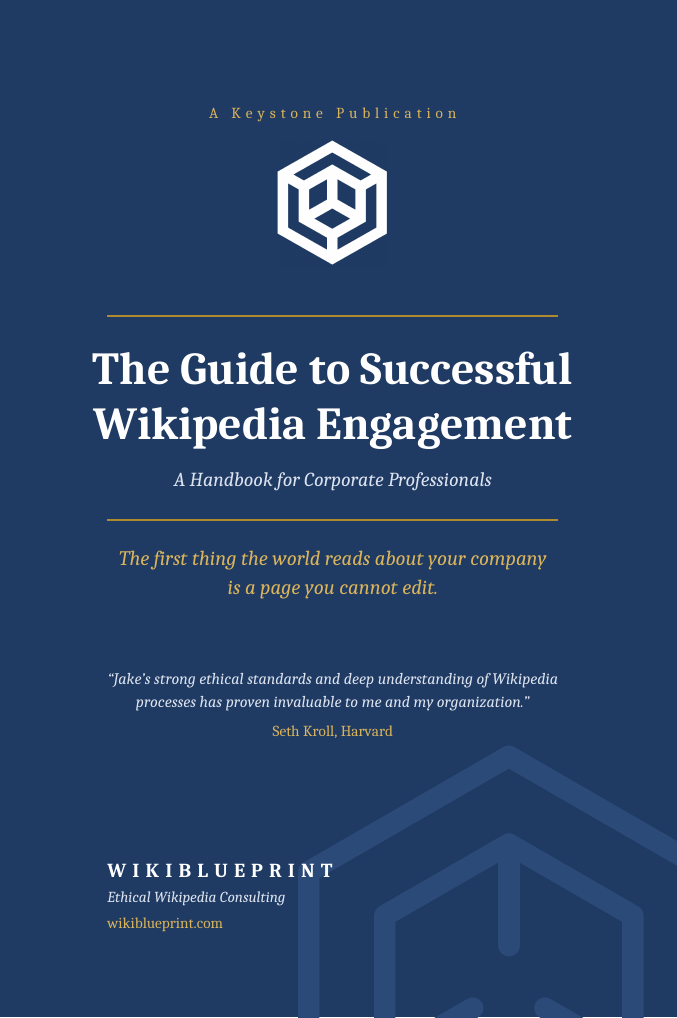
Read the corporate guide
Seventy-five pages on working with Wikipedia as a company: the rules, the requests that pass, the ones that fail, and how to handle criticism and sensitive topics.
Bring us the name, and whatever worries come with it.
Send the name of the company or person and we reply with a short set of questions. You will know where things stand before you commit to anything, and there is no wrong time to ask.