
For institutions and mission-driven organizations
Museums, libraries, archives, publishers, research institutes, foundations, and open-source and civic organizations hold knowledge the public is looking for. Wikipedia treats curators, librarians, and archivists as allies, and its conflict-of-interest guideline names Wikipedians in Residence as an accepted form of paid work, because the interest is aligned: your knowledge, shared for public benefit.
Wikipedians in Residence
A Wikipedian in Residence is an experienced editor who works inside your institution to share its text, images, and data on Wikipedia, Wikimedia Commons, and Wikidata. They write and improve articles in your subject area, upload collections under open licenses, train your staff, run edit-a-thons, and report the results.
We help you find the right person, welcome them into your organization, coach them through the year, and turn the results into reports your leadership will want to share. You get the residency without having to learn the movement first.
Every residency starts with a qualitative and statistical assessment of what already exists in your topic area, broken down by gender, geography, and other characteristics, so the work fills the real gaps.
The Successful Wikipedian in Residence is our free, complete guide for institutions considering the role.
Good to know
- Residencies can run for a month or continue for years.
- Part-time and grant-funded arrangements work; many start small.
- Wikipedia's own guidelines welcome the role.
- We have placed and supported residents at scientific publishers, museums, libraries, and research organizations.

Photo by Diliff, CC BY-SA 3.0.
One Wikipedian in Residence, one year
The output of a single residency we placed and supported at Annual Reviews, the nonprofit scientific publisher.
The shape of a residency
Working with the Wikipedia community to enrich knowledge in the encyclopedia is a specialist communication skill. WikiBlueprint has supported us in finding two Wikipedians in Residence, both highly qualified and motivated individuals who have worked tirelessly to add high quality citations to Wikipedia. They have improved our understanding of the Wikipedia editor culture, and given us thoughtful advice on how to navigate a range of issues, from conflict of interest of experts to the importance of linking to independent fact-based content. If you ever get the chance to work with WikiBlueprint, take it!
Liz Allen, Director of Strategic Development, Annual Reviews
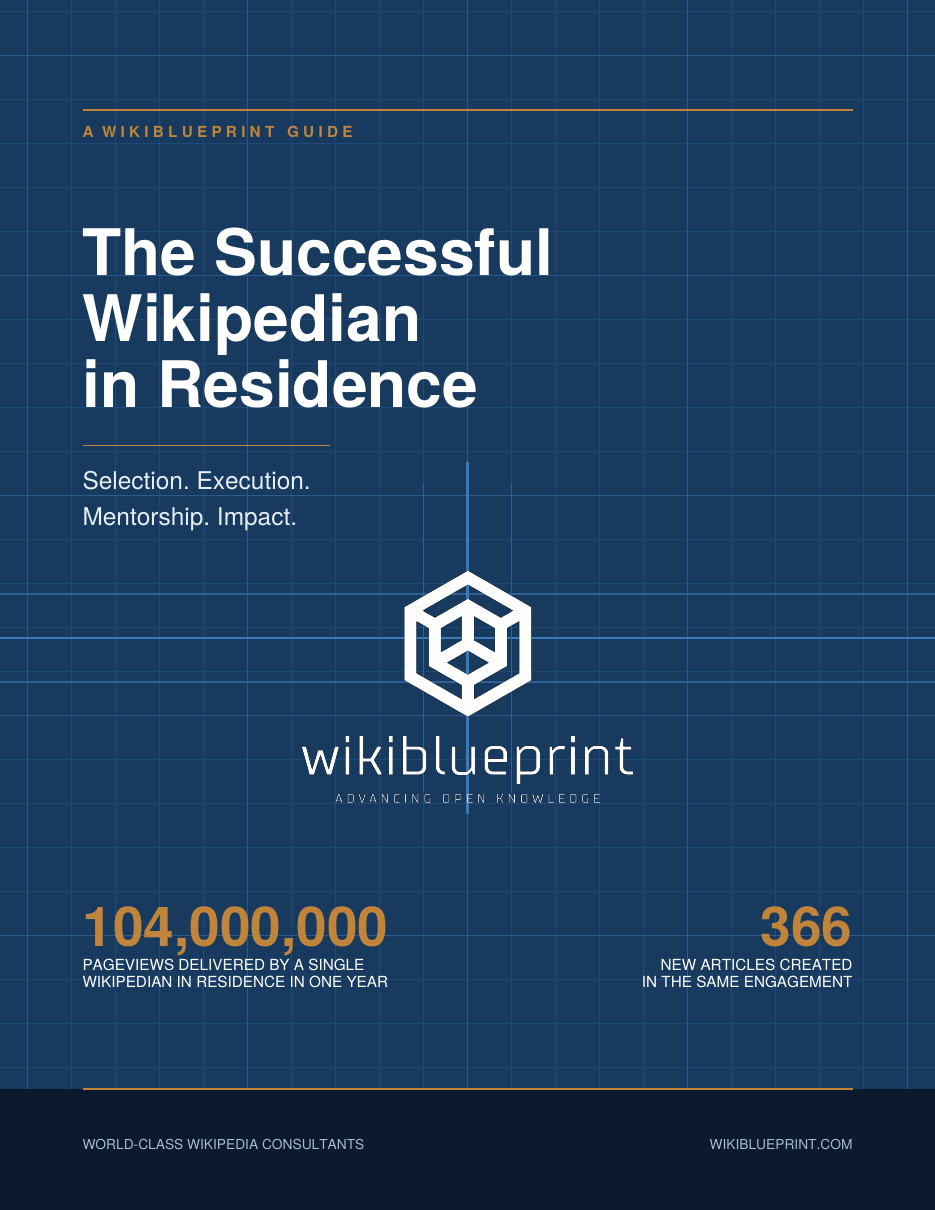
The Successful Wikipedian in Residence
Our free guide for institutions considering the role: selection, execution, mentorship, and impact, from the first internal conversation to year two and beyond.
Read the guideInstitutions that have hosted a Wikipedian in Residence
Museums and culture
- Africa Centre
- American Folk Art Museum
- British Museum
- Museo Soumaya
- Museum of Modern Art
- Music Museum of Barcelona
- Smithsonian
- Swedish Performing Arts Agency
Libraries and archives
- Biblioteca Nacional de Chile
- Bodleian Library, Oxford
- British Library
- Houghton Library, Harvard
- Library and Archives Canada
- National Archives of Tunisia
- National Library of Scotland
- U.S. National Archives
Science and medicine
- Cancer Research UK
- Chemical Heritage Foundation
- Cochrane
- Consumer Reports
- Museo delle Scienze
- National Institutes of Health
- Natural History Museum
- The Royal Society

Photo by Diliff, CC BY-SA 3.0.
A sample of institutions across the movement that have hosted the role. WikiBlueprint has placed or supported ten Wikipedians in Residence: two at Annual Reviews, and one each at Cochrane, the Smithsonian's Biodiversity Heritage Library, Pérez Art Museum Miami, Equis Research, Milton Public Library, West Virginia University Library, the Marilyn Brachman Hoffman Foundation, and the Sharjah Archaeology Authority.
Training
We turn curious people into confident editors. Our six-session training ends with a new live article and a working understanding of how Wikipedia decides what stays. A six-week syllabus takes a group from scratch to proficiency, and longer programs build real expertise inside a team. Wikipedians in Residence come to us for training too; there is always more to learn.
For communications and PR teams, we run a five-session program on Wikipedia requests: sorting a client roster by readiness, reading sources the way reviewers do, writing requests that pass, and handling declines without escalating.
Training suits journalists, professors, subject experts, librarians, museum staff, and agency teams, in person or on video, one person or a room.
Jake was an incredible guide who made editing Wikipedia a fulfilling and fun experience. Everything was broken down in a way that was easy to understand, even when it came to more complicated things like Wikipedia's rules and 'anti-rules.' I left with the confidence to make edits and contributions that might actually stick.
Workshop participant, Bakehouse Art Complex

Citations, reliability, and tools
Citations are the bedrock of Wikipedia, and we build and advise on the tools that keep them sound. Our founder started the Internet Archive partnership that has repaired more than thirty million dead citation links across Wikipedia, built the Citation Watchlist that lets editors monitor sources of concern, and led the Hacks/Hackers project that developed a reliable-source evaluation bot.
This work suits Wikimedia affiliates, news organizations, research funders, and any institution whose mission depends on the reliability of the open record: citation monitoring, misinformation detection, open-knowledge project management, and product decisions informed by the community.
Strategy and advisory
Some engagements are advice: a fundraising strategy for a medical Wikipedia foundation, a rebrand and product strategy for an open-access nonprofit, a podcast series on decolonizing the internet's languages, an editor-training program to counter extremism, a landscape paper on how an image-interoperability standard meets Wikimedia. If the question is how your organization should meet the open-knowledge movement, we would be excited to explore it with you.
Since we started our program it has proven to be endlessly inspiring. Navigating the ins and outs of Wikipedia and finding the right person was made possible by Jake Orlowitz. Every museum should consider starting a Wikipedian-in-Residence program, and if you do, you should start by reaching out to Jake at WikiBlueprint.
Jay Mollica, Pérez Art Museum Miami
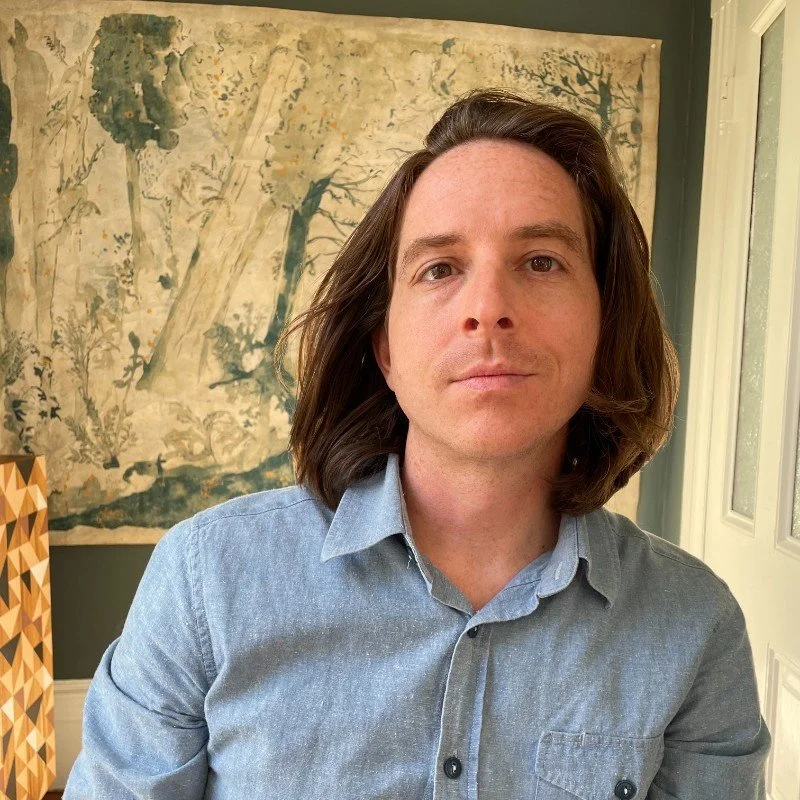
Jake greatly enhanced my experience at Milton Public Library. He supported me with training on editorial processes, policies, and accessing resources. He went above and beyond towards my own career development, encouraging the value I bring to my workplace. Thanks to Jake, I developed more confidence in myself as a professional.
Emily Carrasco-Acosta, Wikipedian in Residence, Milton Public Library



Questions institutions ask
Can we get help without hiring a whole person?
Yes. We have run projects that lasted a month and involved no hiring at all, and residencies that continued for years. Part-time and short-term contracts work, and the best way to start is often small: a set of image uploads, a few edit-a-thons, or a staff training.
Does a Wikipedian in Residence have a conflict of interest?
More often an alignment of interest. Wikipedia's guidance says curators, librarians, and archivists are encouraged to help improve the encyclopedia, and its conflict-of-interest guideline lists Wikipedians in Residence among the forms of paid editing the community regards as acceptable. The resident discloses the affiliation and edits to educate, never to promote.
Can you work in languages other than English?
We are English-first. Half of all Wikipedia traffic goes to the English edition. We also hire language specialists to fit a project, such as a bilingual residency for a museum in Miami.
How do we handle institutional concerns about risk?
Wikipedia's rules are stricter than most institutional policies about copyright, neutrality, and sourcing, so the permitted path and the safe path are the same one. Wikipedians in Residence have been working inside institutions for more than a decade, with no known examples of significant harm to reputation, giving, attendance, or coverage. We work through concerns with your leadership before anything starts.
What does it cost?
Small projects can be ten hours over a month. Larger programs run to twenty hours a week for a year and carry the cost of a hire plus consulting fees. If you want to pursue grant funding for the work, we will help with the application on a contingency basis.
Reading on the role
- Gerald R. Ford Library Hires "Wikipedian in Residence", The New York Times
- "Wikipedian-in-Residence" Helps Share Smithsonian Archives, The Chronicle of Philanthropy
- On the job with a "Wikipedian in residence", The Conversation
- Meet TED's Wikipedians-in-residence, TED Blog
- The Cochrane-Wikipedia Partnership in 2023, Cochrane
- What It's Like to Be a Wikipedian in Residence, Information Today
- Concordia's Wikipedian-in-residence has a lot on her plate, Montreal Gazette
- Where should we share health information if not where people are looking?, NIHR
- Wikipedian in Residence overview, Wikimedia Outreach
- Wikipedia Workbook for Cultural Institutions, Mary Mark Ockerbloom
Tell us what your institution holds, and what you hope people will find.
Send a note about your collections, your expertise, or the program you are considering and we reply with a short set of questions and a scoping call.